
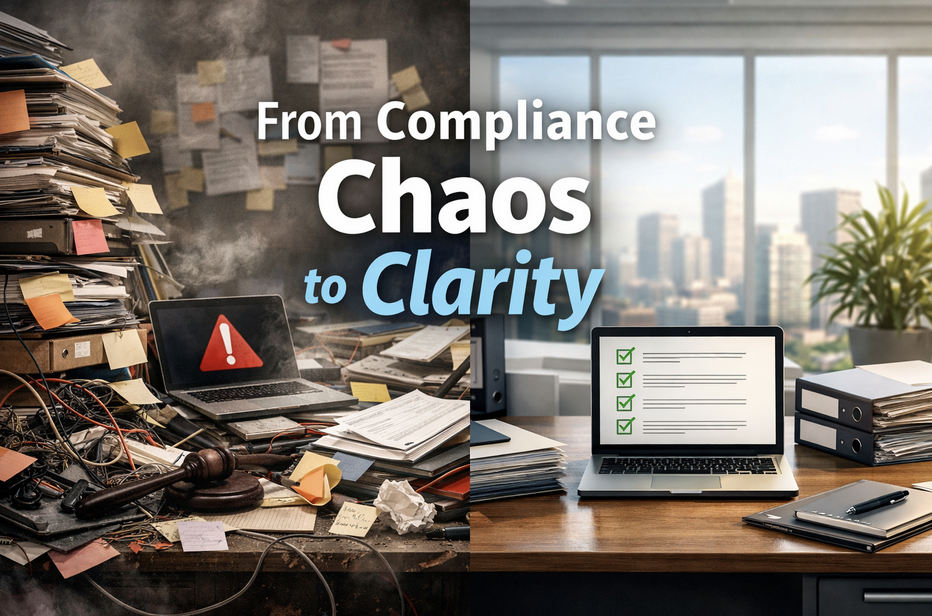
For small and mid-sized businesses, the dawn of 2026 represents far more than a simple calendar transition, it marks the beginning of a fundamentally new compliance reality that will test the capacity of even well-organized HR operations. Dozens of state level regulatory changes affecting minimum wages, salary thresholds for overtime exemption, data privacy standards, and AI-based hiring oversight has already activated simultaneously on January 1st, creating what seasoned HR professionals are already describing as a “compliance perfect storm.”
The challenge isn’t merely the volume of changes, though that alone would strain resources. It’s the geographic fragmentation where requirements vary substantially across jurisdictions, the technical complexity where seemingly straightforward regulations carry nuanced implementation requirements, and the compressed timeline where organizations must achieve compliance across multiple fronts simultaneously rather than having the luxury of sequential implementation.
While large enterprises can absorb these concurrent obligations through dedicated legal departments, compliance specialists, and sophisticated HR information systems, most SMBs and nonprofits lack these structural advantages. For these organizations, every new regulatory requirement translates into another manual tracking mechanism, another deadline competing for limited attention, another potential penalty exposure threatening organizational resources. The compliance burden doesn’t scale down simply because an organization operates with constrained capacity – the obligations remain identical regardless of whether you employ fifty people or five thousand.
But this mounting complexity doesn’t inevitably lead to chaos and crisis. With thoughtfully implemented AI-driven HR platforms, 2026 could instead mark the year when small and mid-sized businesses transition from perpetual reactive compliance, scrambling to address requirements after they’ve already taken effect, to genuinely proactive accountability where systematic monitoring and automated adaptation make regulatory changes manageable rather than overwhelming. This transformation turns what has historically been an operational headache into a genuine strategic advantage that differentiates well-managed organizations from those operating on hope and manual processes.
Understanding the Regulatory Convergence Creating This Crisis
The compliance landscape confronting SMBs in 2026 represents a convergence of multiple regulatory trends that have been building momentum across different domains simultaneously. Minimum wage increases will cascade across nearly twenty states, each with jurisdiction specific effective dates, coverage requirements, and interaction with local ordinances that create additional complexity layers. But wage adjustments represent merely the most visible change in a broader transformation.
Pay transparency and equal pay reporting mandates will demand that organizations systematically track detailed compensation data disaggregated by role, gender, race, and other demographic characteristics, then store that sensitive information securely while making portions available for regulatory reporting and candidate disclosure. The administrative infrastructure required to capture, maintain, and report this data reliably exceeds what most small businesses currently possess, yet the penalties for non-compliance can prove devastating.
Data privacy regulations continue proliferating with each jurisdiction implementing unique requirements around employee information handling, breach notification timelines, consent mechanisms, and individual data access rights. HR departments that already struggle with basic record keeping must now navigate overlapping privacy frameworks where the most stringent standard you operate under effectively becomes your organization wide requirement, because managing different privacy protocols for different employee locations proves operationally infeasible.
Perhaps most significantly, hiring practices face new scrutiny under emerging “AI accountability” frameworks like Colorado’s Artificial Intelligence Act. These regulations mandate bias audits conducted by qualified assessors, comprehensive documentation proving human oversight remains substantive rather than perfunctory, and clear disclosure to candidates when automated systems influence employment decisions. Organizations using AI for candidate screening, skills assessment, or any employment decision support suddenly face compliance obligations that extend far beyond traditional equal employment opportunity requirements.
The cumulative effect creates an environment where HR leaders must simultaneously track regulatory changes across multiple domains and jurisdictions, update policies and procedures to reflect new requirements, implement or modify systems to capture newly required data, train staff on changed processes, communicate updates to employees and candidates, and maintain documentation proving compliance, all while continuing to perform the core HR functions that keep organizations operating.
This is why so many HR professionals are recognizing that the manual compliance approaches that barely sufficed in simpler regulatory environments simply cannot scale to meet 2026’s complexity. The shift from manual checklists and periodic reviews to AI-assisted continuous monitoring isn’t about chasing technology trends – it’s about operational necessity when human capacity reaches its breaking point.
The Hidden Costs of Manual Compliance Management
The typical SMB HR manager already juggles an impossible portfolio: full-cycle recruiting from job posting through offer negotiation, comprehensive onboarding for new hires, benefits administration across multiple carriers and plan types, payroll coordination with various deduction types and regulatory requirements, employee relations including performance management and conflict resolution, and compliance monitoring across employment law, wage-and-hour regulations, and workplace safety standards. This workload often falls on one or two people handling responsibilities that would span multiple full-time roles at larger organizations.
Each new regulatory requirement means another policy document requiring review and revision, another form template needing updates, another required notice demanding posting or distribution, another tracking mechanism requiring implementation. The patchwork approach that emerges – spreadsheets tracking different compliance domains, calendar reminders for various deadlines, periodic manual audits hoping to catch gaps – creates fragility where a single oversight can trigger substantial consequences.
The real cost of this manual approach extends well beyond the time consumed. It’s the exposure that accumulates silently until it manifests as crisis. Missing a single update to mandatory workplace posting requirements can generate fines starting at hundreds of dollars and escalating into thousands when violations affect multiple employees or persist over time. Failing to properly document pay equity data or maintain required records can trigger regulatory audits that consume weeks of staff time and potentially reveal additional violations. Operating with outdated employment practices or misclassifying workers based on superseded standards creates legal exposure that can threaten organizational viability when claims materialize.
In environments where every HR system including payroll, benefits administration, applicant tracking, performance management, document storage, operates independently with its own data structures and user interfaces, critical information inevitably gets lost in translation between platforms. An employee’s correct address exists in one system but remains outdated in another. Policy acknowledgments get tracked in spreadsheets that don’t sync with the document management system storing the actual policies. Wage classifications in the payroll system don’t automatically update when state thresholds change. The data fragmentation creates compliance gaps that emerge only when auditors request documentation or violations trigger investigations.
The uncomfortable reality is that even conscientious, well-intentioned HR teams routinely find themselves out of compliance in this environment, not because they lack commitment or competence, but because they’re attempting to manually manage complexity that exceeds reasonable human tracking capacity. The solution isn’t working harder or maintaining more elaborate spreadsheets. It’s recognizing that systematic, technology-enabled compliance management has become essential infrastructure rather than optional enhancement.
How AI-Powered Platforms Transform Compliance From Burden to Capability
Modern AI-driven HR platforms fundamentally restructure the compliance equation by making monitoring and adaptation continuous processes rather than periodic projects. Instead of relying on quarterly compliance reviews or annual policy updates where gaps persist until scheduled maintenance cycles catch them, intelligent systems actively track regulatory changes across all relevant jurisdictions in real-time, automatically flag when updates affect your operations, adjust document templates and workflow configurations to reflect new requirements, and alert appropriate staff about what specifically needs human review or decision-making.
Consider the operational transformation this enables. Your HR platform doesn’t just manage onboarding documents as static templates, it understands which forms and acknowledgments each employee needs based on their location, role, and hire date, knows when regulatory changes require updated versions, automatically generates compliant documents incorporating jurisdiction specific requirements, and maintains comprehensive records proving proper completion. When new wage laws or family leave expansions take effect, the system identifies affected employees, flags necessary policy revisions, updates required postings, and ensures proper communication – all without requiring HR staff to monitor dozens of state labor department websites or interpret complex regulatory bulletins.
The compliance advantage extends beyond simply reacting faster to changes. AI platforms create the systematic accountability and documentation that regulatory scrutiny increasingly demands. With unified audit trails, organizations gain clear visibility into every compliance relevant action who approved a decision, when it occurred, under what policy version, with what supporting rationale. HR managers can demonstrate not just that current practices comply but that historical decisions followed proper procedures under the standards applicable at that time. This level of documentation granularity proves nearly impossible to achieve through manual record-keeping but emerges automatically as a byproduct of well designed AI systems.
The transformation proves particularly valuable for organizations operating across multiple jurisdictions where compliance requirements fragment along state and local lines. Rather than maintaining separate processes and documentation for employees in different locations, AI platforms can automatically apply jurisdiction appropriate requirements while maintaining centralized visibility and control. The system ensures California employees receive California specific notices and benefits while Texas employees receive different provisions – all managed through unified workflows that prevent the errors and gaps that manual multi-jurisdiction compliance inevitably creates.
Preserving Human Judgment While Gaining Systematic Reliability
The critical design principle separating effective AI compliance systems from problematic pure automation involves keeping people meaningfully central to consequential decisions rather than reducing them to rubber-stamps on algorithmic outputs. Automation should amplify the judgment, contextual reasoning, and ethical discretion that defines excellent HR practice, not replace it with rigid rule-based processing that eliminates nuance.
Human-in-the-loop architecture ensures that every AI recommendation remains transparent in its reasoning and subject to human validation before implementation. When the system flags a potential compliance issue, perhaps identifying employees whose compensation has fallen below revised salary thresholds or detecting missing acknowledgments for updated policies – it surfaces the concern to appropriate staff who can evaluate context, consider organizational implications, and determine proper responses. When AI assists with candidate evaluation by analyzing qualifications against job requirements, it maintains strict separation between demographic information and skills assessment, generates clear documentation of ranking rationale, and requires human reviewers to make final advancement decisions with full authority to override algorithmic suggestions.
This balanced approach between automation and oversight transforms AI from potential compliance risk into genuine compliance advantage. As regulators intensify focus on algorithmic accountability, explainability in automated decision-making, and meaningful human oversight, organizations using human-centric systems will already satisfy emerging standards rather than scrambling to retrofit compliance into systems designed for pure automation.
The accountability benefits extend beyond satisfying regulators to building stakeholder trust. Employees gain confidence that policies are applied fairly and consistently rather than arbitrarily. Candidates understand that technology assists rather than replaces human evaluation of their qualifications. Leadership teams can defend organizational practices with documented reasoning rather than hoping manual processes were followed correctly.
Building Resilience Through Systematic Infrastructure
Organizations preparing for 2026’s compliance challenges should focus on three foundational capabilities that create resilience regardless of how specific regulations evolve. First, comprehensive risk mapping identifies where current HR processes face the greatest compliance exposure. Common vulnerability areas include wage and overtime classification where state thresholds constantly shift, record-keeping practices where documentation gaps create audit risk, data privacy handling where multiple frameworks create overlapping obligations, and hiring processes where AI usage or bias concerns attract regulatory scrutiny. Understanding your specific risk profile enables targeted mitigation rather than generic compliance theater.
Second, strategic automation focuses on areas where technology delivers maximum risk reduction and capacity reclamation. Regulatory monitoring across relevant jurisdictions, recurring compliance task management like policy acknowledgment tracking, automated report generation for audit preparation, and systematic documentation of decision rationale all represent high value automation targets. The principle involves automating repetitive work where consistency matters more than creativity while keeping humans in approval chains for decisions requiring judgment, discretion, or ethical consideration.
Third, unified data infrastructure eliminates the fragmentation that creates most compliance gaps. Rather than maintaining separate systems for payroll, benefits, recruiting, onboarding, performance management, and document storage – each with independent data structures requiring manual synchronization – organizations should consolidate around platforms that maintain single authoritative sources for employee information, policy documentation, and compliance records. This centralization doesn’t just improve efficiency; it fundamentally strengthens compliance posture by ensuring that updates propagate consistently and that audit evidence exists in coherent, accessible repositories.
Each capability builds organizational resilience that extends beyond specific regulatory requirements to create adaptive capacity for whatever compliance challenges emerge next. The goal isn’t merely satisfying 2026’s known obligations but developing systematic infrastructure that can absorb future changes without requiring comprehensive process redesign.
From Cost Center to Trust Engine: The Strategic Value of Proactive Compliance
Looking beyond immediate regulatory obligations to longer-term strategic positioning reveals that compliance excellence creates genuine competitive advantages rather than representing mere cost of business. Organizations that can demonstrate proactive governance, systematic accountability, and reliable compliance practices earn credibility with multiple critical stakeholder groups simultaneously.
Employees gain confidence working for organizations that treat compliance seriously, suggesting that their rights will be respected and their interests protected. Top talent increasingly considers operational competence and ethical practices when evaluating employers, making compliance infrastructure a genuine recruitment advantage. Regulatory agencies differentiate between organizations making good-faith systematic efforts and those operating through neglect or deliberate corner cutting, often exercising discretion more favorably toward the former when minor violations emerge.
Business partners and customers increasingly evaluate vendor compliance practices as risk factors in relationship decisions, particularly in regulated industries where vendor failures can create client liability. Demonstrating systematic HR compliance signals broader operational maturity that strengthens commercial relationships. Investors and board members view strong compliance infrastructure as evidence of management competence and organizational sustainability.
The evolution from viewing compliance as burdensome cost to recognizing it as strategic asset will define successful SMBs in 2026 and beyond. AI-enabled platforms will continue evolving from task automation tools into strategic advisory systems that predict risks before they materialize, forecast workforce needs based on business growth, align policy proactively with expansion plans, and transform compliance from reactive obligation into competitive differentiator.
For organizations that once struggled merely to keep pace with regulatory changes, this represents massive transformation in operational capability and strategic positioning. Compliance stops being red tape that constrains business and becomes trust foundation that enables sustainable growth.
The ultimate goal isn’t avoiding penalties or satisfying auditors – though both matter. It’s building HR systems where compliance becomes second nature, woven into normal workflows rather than bolted on as afterthought. When accountability operates systematically rather than sporadically, when documentation exists automatically rather than requiring reconstruction, and when regulatory changes trigger adaptation rather than crisis, organizations gain the operational freedom to focus on growth, innovation, and mission advancement rather than remaining perpetually mired in compliance anxiety.
2026 will test every HR department’s adaptability, but it will disproportionately reward organizations that prepared systematically rather than waiting for enforcement actions to force reactive responses. By pairing AI precision with human wisdom, small and mid-sized businesses can transform regulatory complexity into operational clarity and compliance risk into organizational readiness.
Keywords: AI in HR, SMB compliance, HR accountability, HR automation, compliance risk management, labor law 2026, human-in-the-loop, AI governance, proactive compliance, Intelligent DataWorks, workforce automation, HR technology, AI audit trail, multi-state compliance, data privacy regulations, AI-driven HR.
Recent Comments